
Beginning a New Role at Zenzie Tinker Conservation by Molly Asbury
In July 2025 I was fortunate enough to be offered a maternity cover role at ZTC following completion of an MPhil in Textile Conservation at the University of Glasgow. Having previously volunteered at the studio, once before starting my degree in Glasgow, and a second time before beginning my second year there, I was very excited to be returning and to find out what wonderful array of objects I would get to work on this time round!
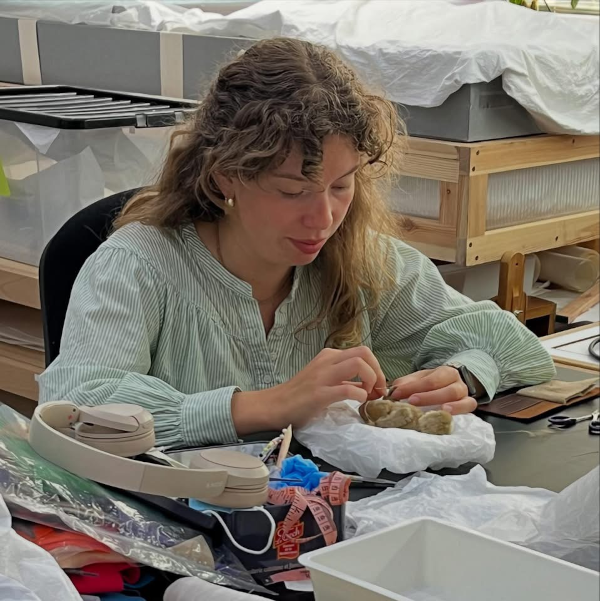
Initially starting on a part-time basis alongside completion of my dissertation, I had the opportunity to work on a wide range of projects from the conservation of historic teddy bears to on-site work surface cleaning large wall hangings. From August, I was excited to be in the studio on a full-time basis and to undertake a conservation project more independently from start to finish, outside of an educational setting.
The Object: A Silk Cushion Cover from Nymans
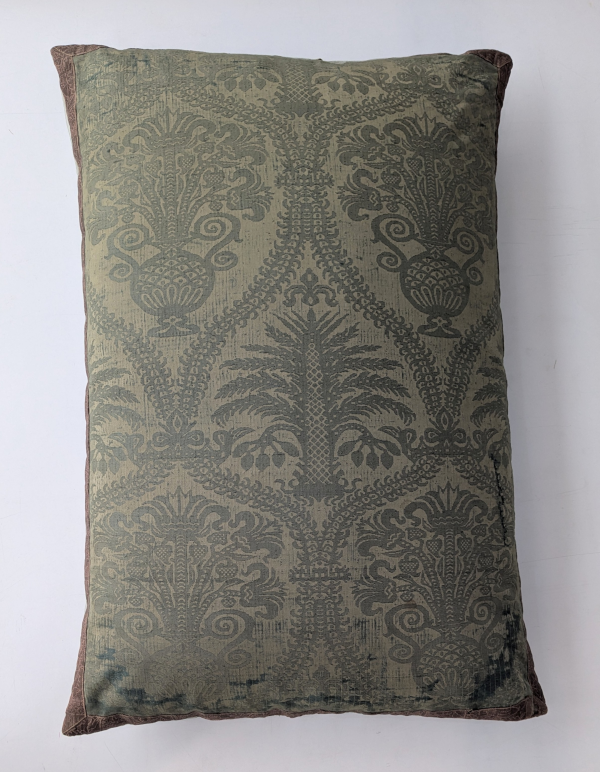
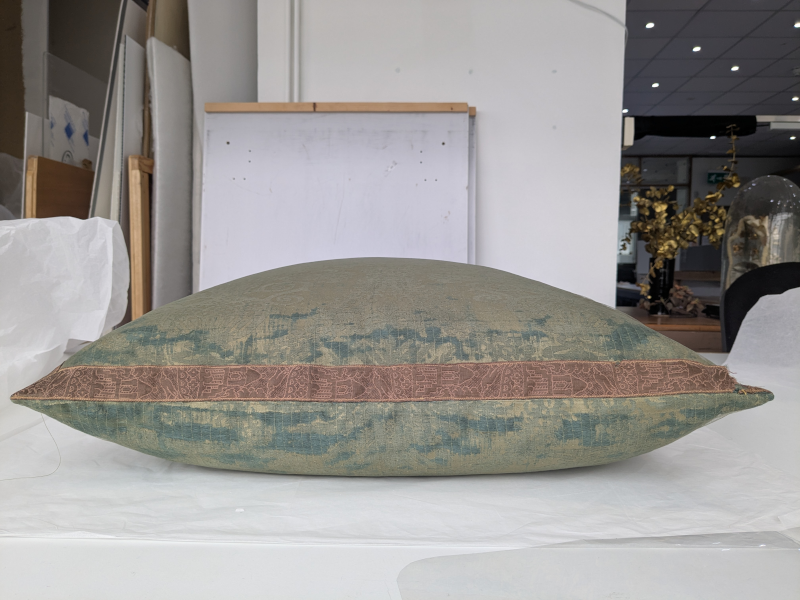
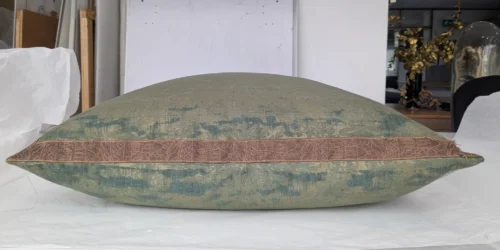
The object I was to conserve was a silk cushion cover with metal braid from Nymans, a National Trust property in West Sussex.
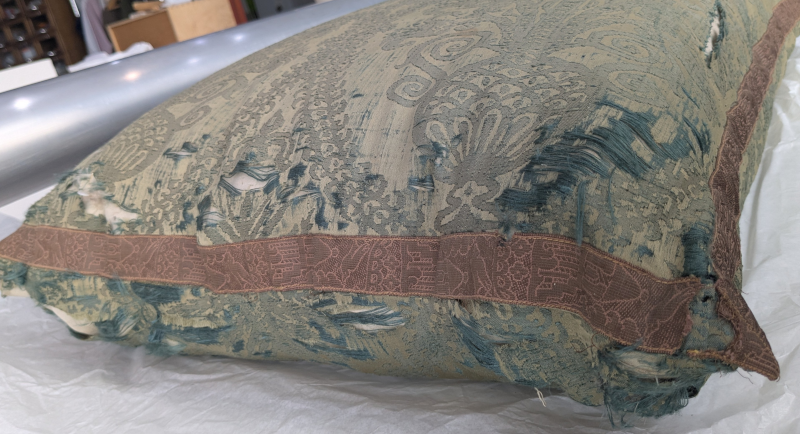
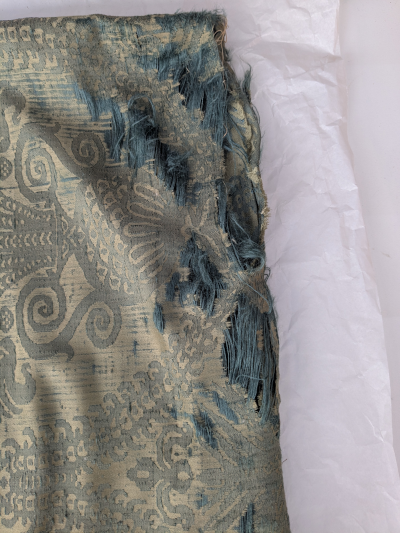
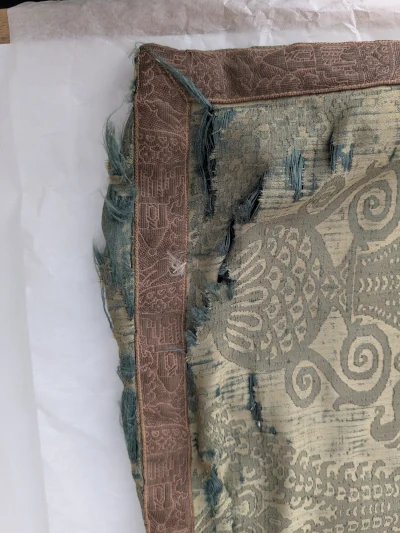
The cushion was one of a set of ten, and due to historic light exposure, the damask silk cushion cover was discoloured and weak, splitting in many areas due to degradation of it’s weft fibres. The cushion pad within the cover was also working against the silk, putting strain on weak areas and causing further degradation with handling.
The aim of the conservation treatment was to stabilise and support the cushion in order for its return to Nymans, where it could be on display. The cushion covers’ poor condition and inherent weakness made this an exciting (and slightly scary!) first full treatment to be undertaking in my new role, but I was pleased to be taking on the challenge.
Initial Examination and Surface Cleaning
On initial examination, it was clear that the cushion cover would need to be removed from the cushion before any work could take place, as even an extremely gentle surface clean would have likely caused more splitting of the silk.
One of the cushion covers’ seams was undone to remove the cushion pad, and it was then cleaned with vacuum suction, and Vellux® fabric.
Dyeing and the First Treatment Plan
At this stage in the treatment, I then undertook dying of both silk and nylon net, aiming to cover the cushion in a sympathetic silk cover to in-fill visually areas of loss on the cover, and to then provide an overlay of nylon net to hold the weak fibres in place. This was the treatment option agreed with the client, however, after dyeing both fabrics and beginning to reconstruct the cushion, it became clear that this option would not provide enough support to prevent further degradation. This emphasised a lesson I had learnt from training, and I’m sure will learn over and over again in practice, but sometimes things in conservation do not go to plan, and you need to re-evaluate your options. Being adaptable, open to rethinking, and comfortable with problem-solving are some of the skills I am finding to be most important as an emerging conservation professional.
Revising the Treatment Approach
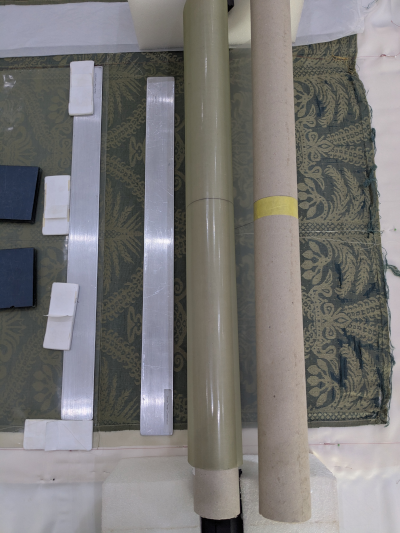
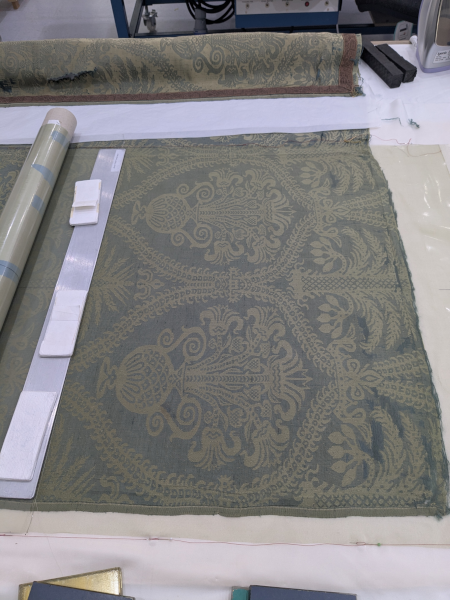
After a rethink, it was decided with the client to instead proceed with a second treatment option – supporting the fragile silk damask on an adhesive-coated silk crepeline, providing support stitching, and then reconstructing the cushion as planned with the silk cover to in-fill areas of loss and a net overlay to further secure weak areas. This is when the second important lesson as an emerging professional was emphasised to me – the importance of colleagues and other conservation professionals in self-development and improvement.
I had had some experience undertaking adhesive treatments whilst studying in Glasgow, but I was very keen to improve my skills and learn from others in the team, having known before I came to ZTC that they are well known for excellence in adhesive use, and having held adhesive workshops in the past. The approach my colleagues demonstrated was different in subtle ways to that which I had learnt in training, and their attention to detail was clear to see. With lots of patience and supervision, I was able to successfully apply an adhesive support to the cushion cover and was pleased with the bond and result achieved.
Collaboration and Professional Development
This experience highlighted to me how invaluable it is to remain open to learning and to seek out opportunities to refine practical skills through collaboration. Being guided on different approaches to this type of treatment deepened my understanding of how adhesives work and how best to utilise them in conservation treatments. It also reinforced the idea that professional growth does not end with formal education, but is continually developed through shared practice. The generosity of my colleagues in sharing their methods and insights not only improved my technical confidence but also strengthened my appreciation for collaboration within the conservation profession and learning from each other.
Final Stages and Outcome
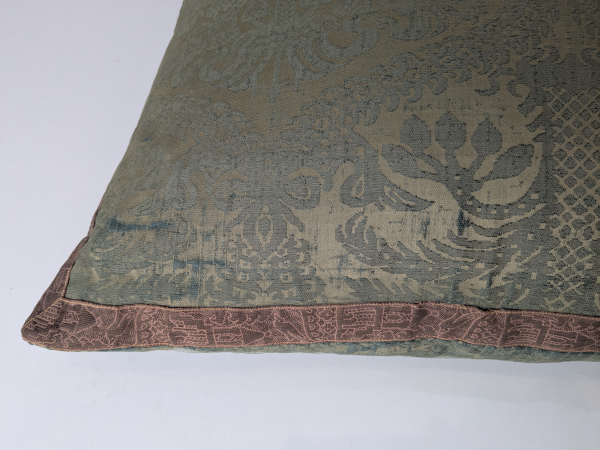
Following the successful application of the adhesive support, I was able to stitch the many required couching lines and net overlay to the cover, before returning it to the newly covered cushion pad.
Overall, I am pleased with the finished outcome of this treatment, and am happy that the cushion is strong enough to withstand handling and display on its return to Nymans. This treatment has taught me valuable lessons, and I am excited for my next challenge as part of the team at Zenzie Tinker Conservation.