
A tale of devotion and conservation
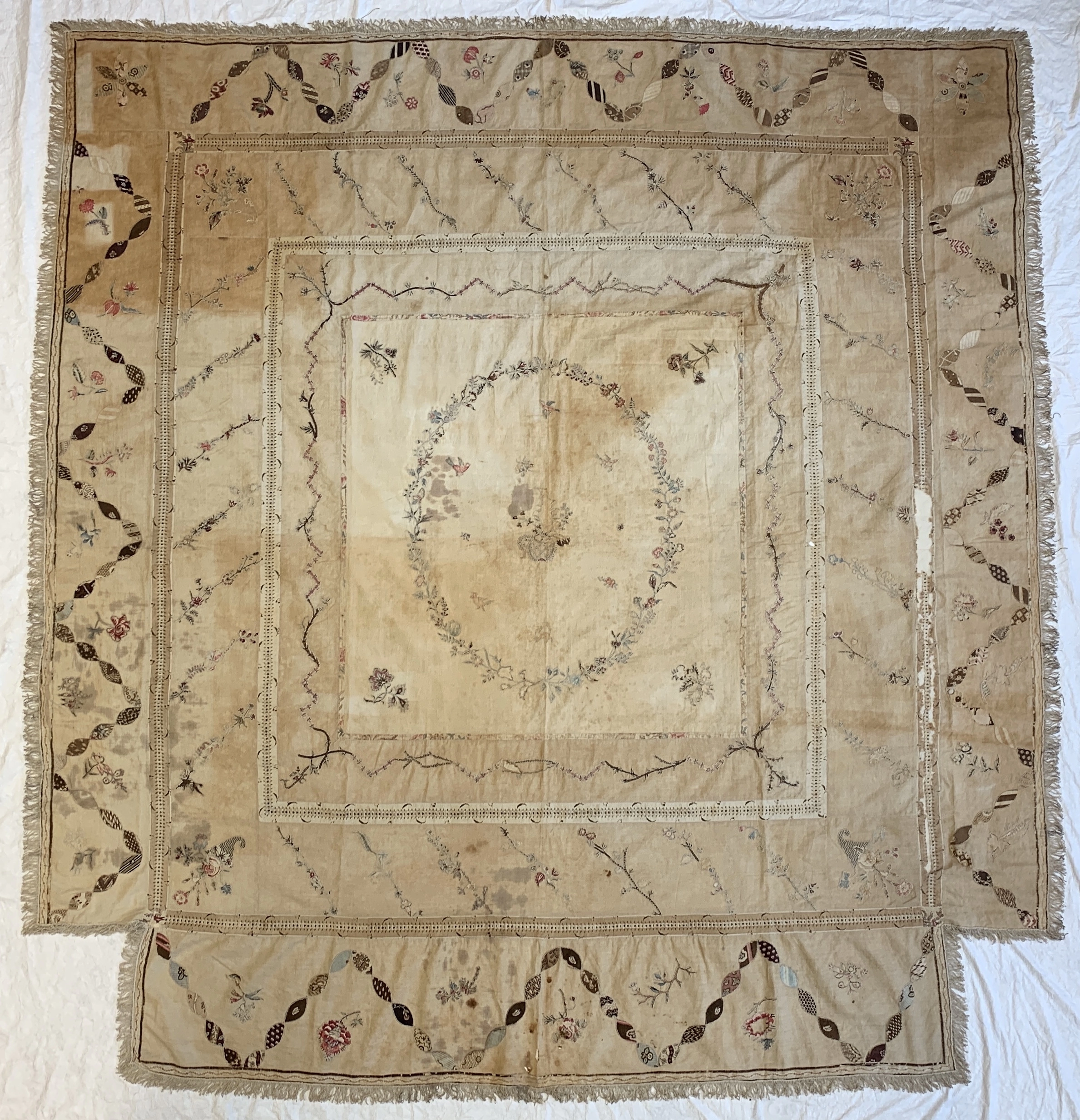
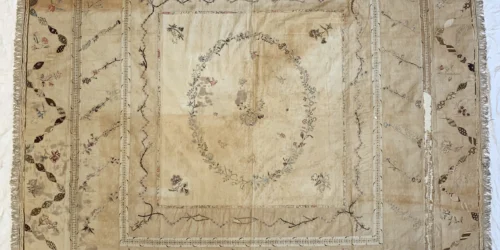
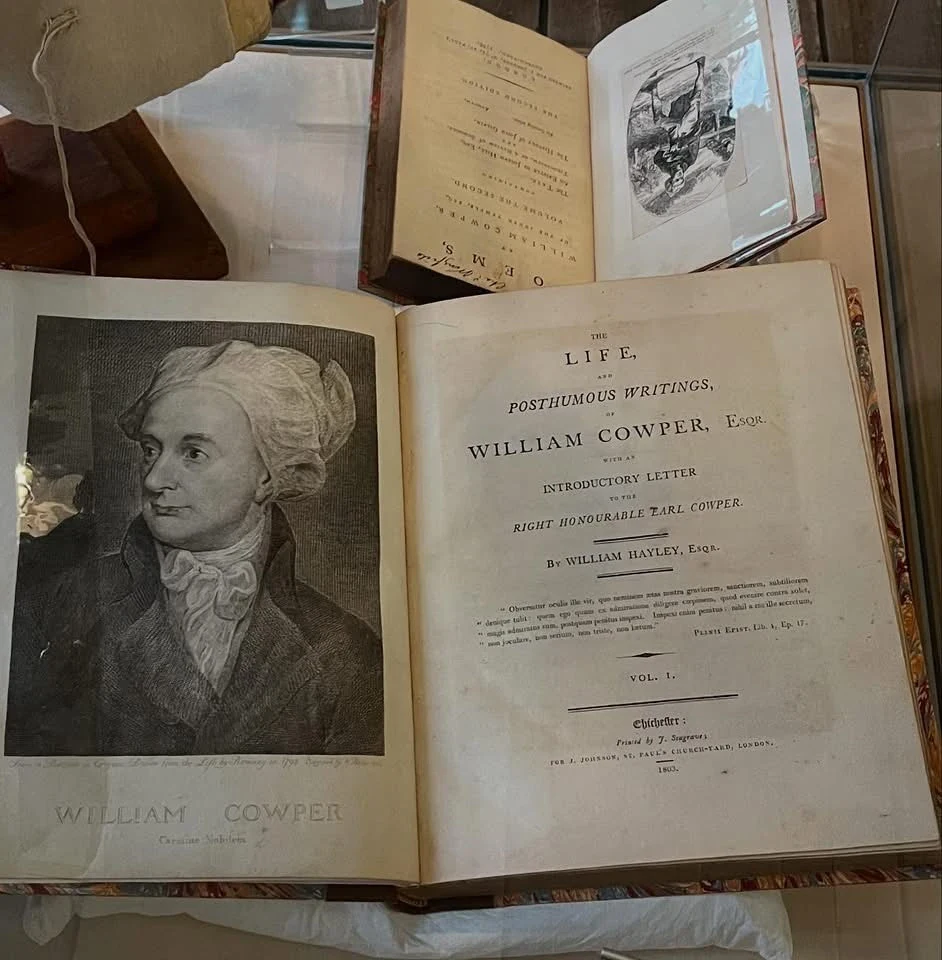
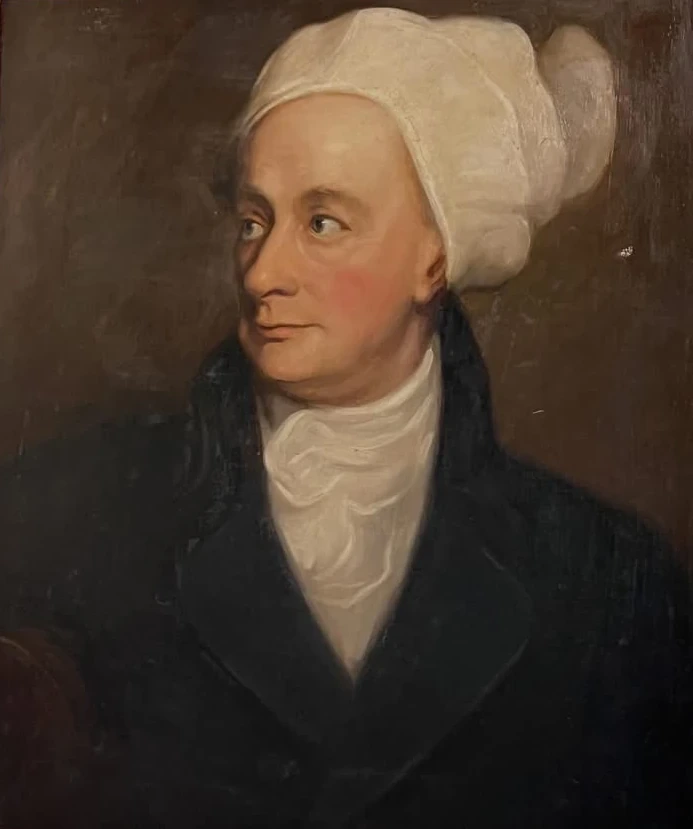
At the heart of the Cowper and Newton Museum lies a remarkable textile—one stitched with care and wrapped up in poetic history. The Cowper Counterpane, a late 18th-century appliqué quilt, was made for the poet William Cowper by Mrs King, a devoted admirer of his work and regular correspondent. This counterpane was a labour of love, inspiring one of the most unique thank-you notes in literary history: a poem devoted entirely to a bed quilt.
“The bard if e’er he feel at all,
To Mrs King by William Cowper
Must sure be quicken’d by a call
Both on his heart and head
To pay with tuneful thanks the care
And kindness of a Lady fair
Who deigns to dress his bed.”
The Story of a Counterpane
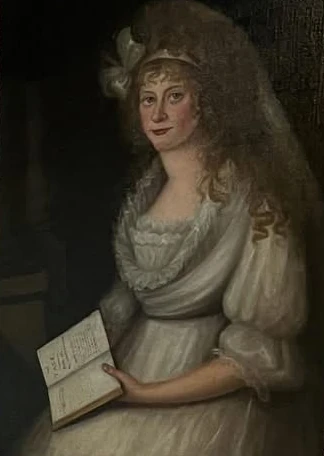
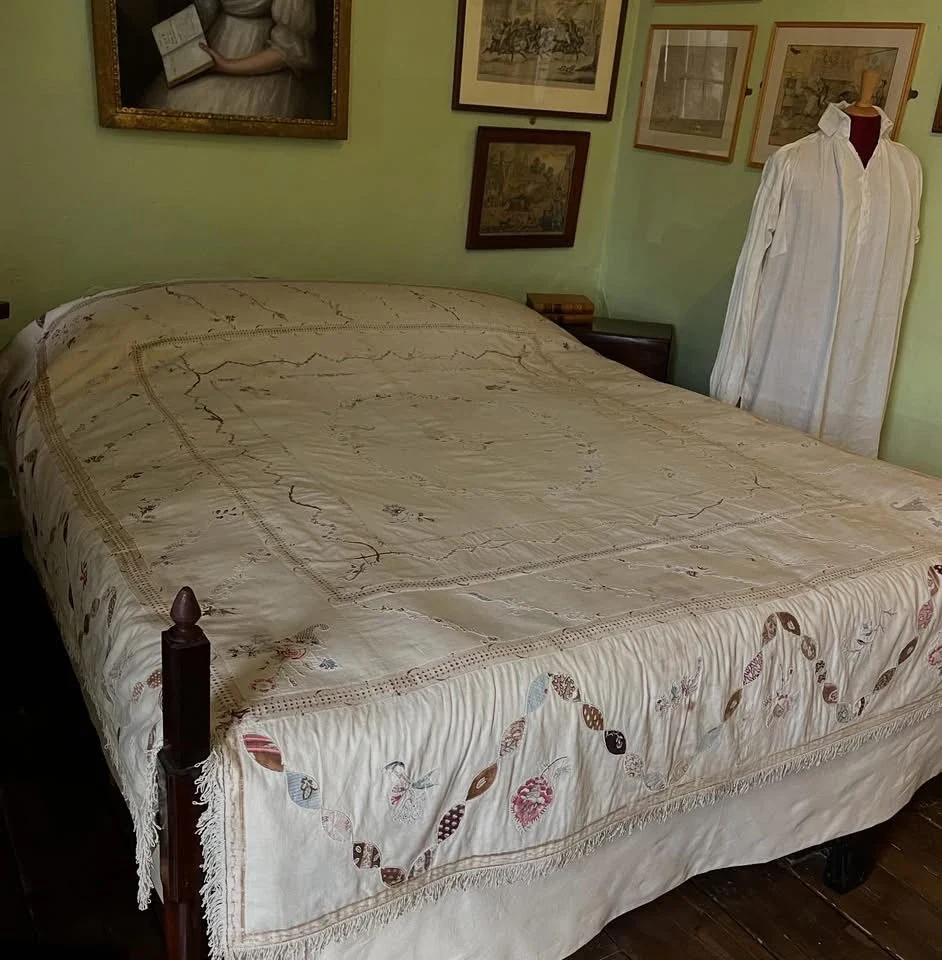
In the summer of 1790, Margaret King completed what must have been years, of painstaking needlework. Carefully cut motifs of flowers, birds, butterflies, and even a small dog—possibly Cowper’s beloved spaniel, Beau—were arranged on a delicate cotton ground. Each piece of the block-printed fabric was applied as a patch with finely knotted thread. Knotting was a popular craft amongst mid-eighteenth century genteel society and ladies would often take their knotting with them to the theatre or intimate social gatherings to demonstrate their serenity and refinement. The sheer quantity of knotted cord alone suggests a work of deep dedication.
Mrs. King and William Cowper corresponded for many years but had had met only once, yet she spent untold hours crafting this counterpane for him, believing that such a beautiful, handmade gift might lift his depressed spirits. Her generosity did not go unnoticed. Upon receiving it, Cowper responded with a heartfelt poem, honouring her artistry. Even Lady Hesketh, Cowper’s patron and a friend of George III’s daughters, pronounced the counterpane “the most beautiful and best executed of the kind she ever saw.”
Margaret King sadly died two years later not seeing Cowper again but presumably reassured that he continued to sleep beneath her skilled handiwork.
The Story of a Conservation
In summer 2023 we were introduced to the Cowper & Newton Museum by conservator Ksynia Marko who had conducted the initial assessment of the counterpane and assisted with the museum funding bids. ZTC were invited to take on the conservation at this stage but Ksynia remained close to the project throughout the work.
Once in the conservation studio it was clear that centuries of wear had taken their toll on this historic counterpane. Our conservator, Ania Golebiowska, was tasked with the careful restoration of the fragile heirloom.
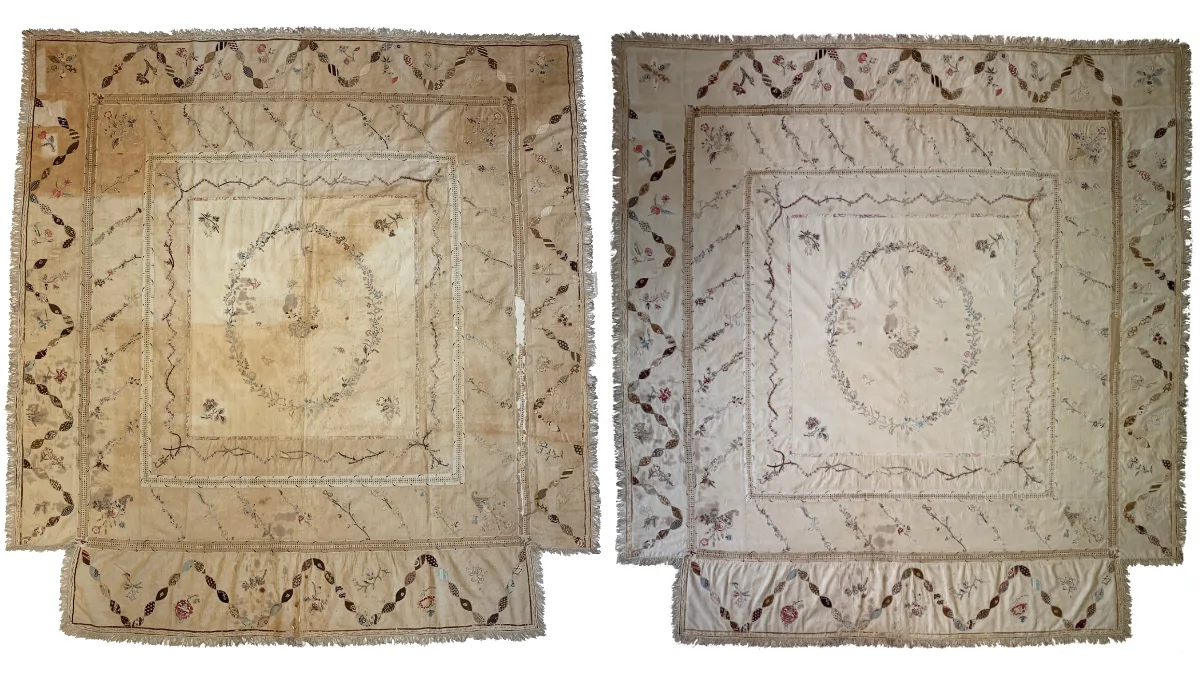
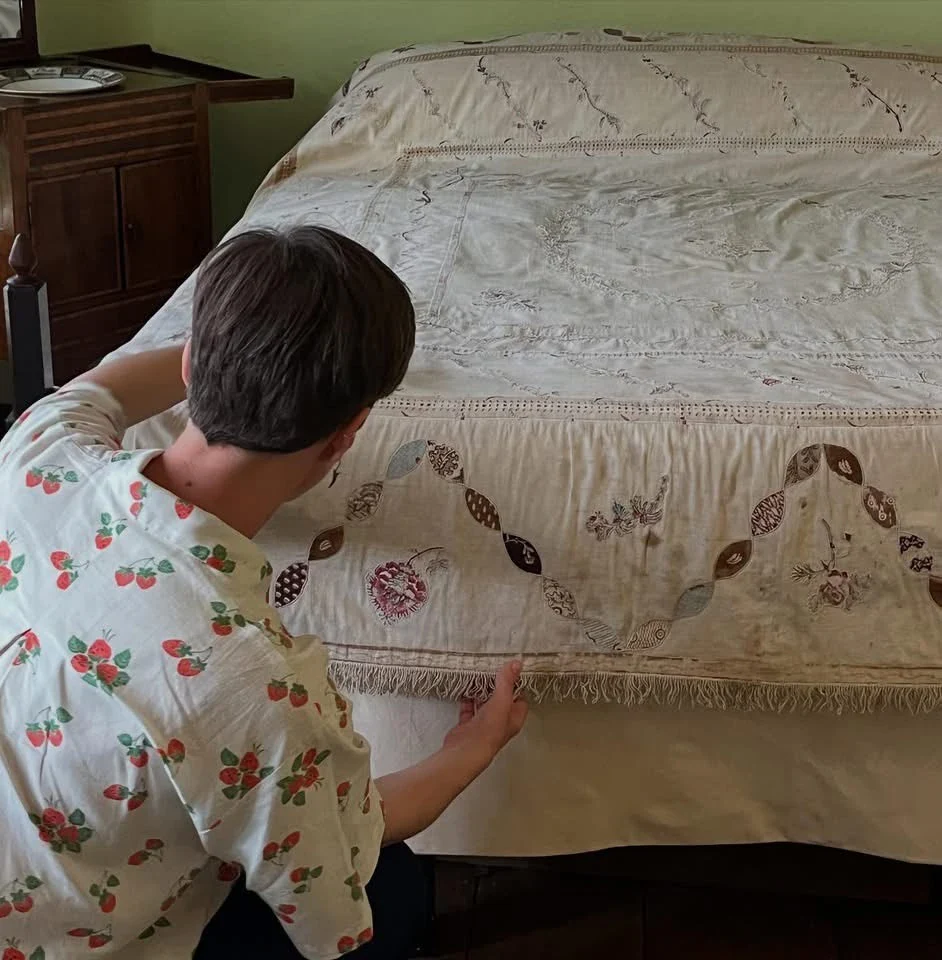
First, the counterpane was carefully examined. Though its structural stitching remained surprisingly strong, the cotton ground had deteriorated significantly. Years of exposure to light had caused discolouration, fading, splitting, and loss, particularly along the borders. The fabric was also marked by puzzling brown-orange stains and areas of extreme discoloration, likely the result of ageing and environmental factors.
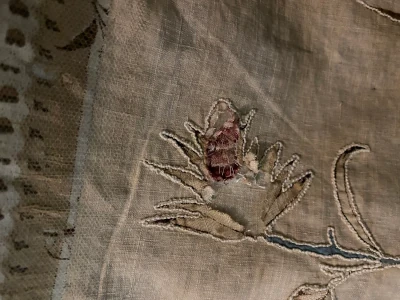
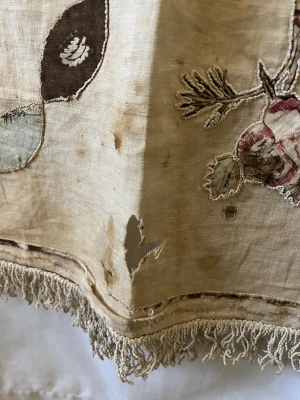
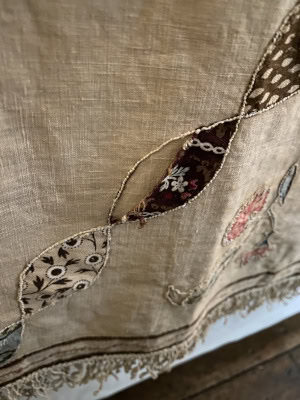
One of the greatest challenges was the delicate printed cotton appliqués, many of which had lost their original vibrancy and had become worn or split . Some of the dyes, particularly the browns, were unstable, making any form of wet cleaning a risky endeavour. Every step of the conservation process would need to be meticulously planned to ensure the survival of this irreplaceable artifact.
A Gentle Revival
The first step was a careful surface cleaning using a low-suction vacuum, removing dust and debris without disturbing the fragile fibres. Next came an extensive series of wet cleaning tests to determine whether the counterpane could safely undergo wet cleaning. These trials revealed that while some of the brown dyes were water-soluble, most of the discoloration—caused by degraded cellulose—could be soaked out and lightened without damaging the fabric.
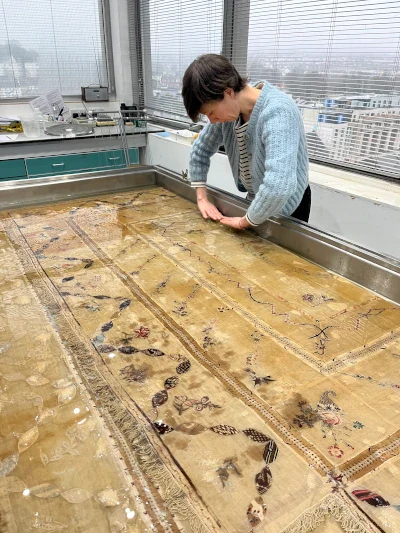
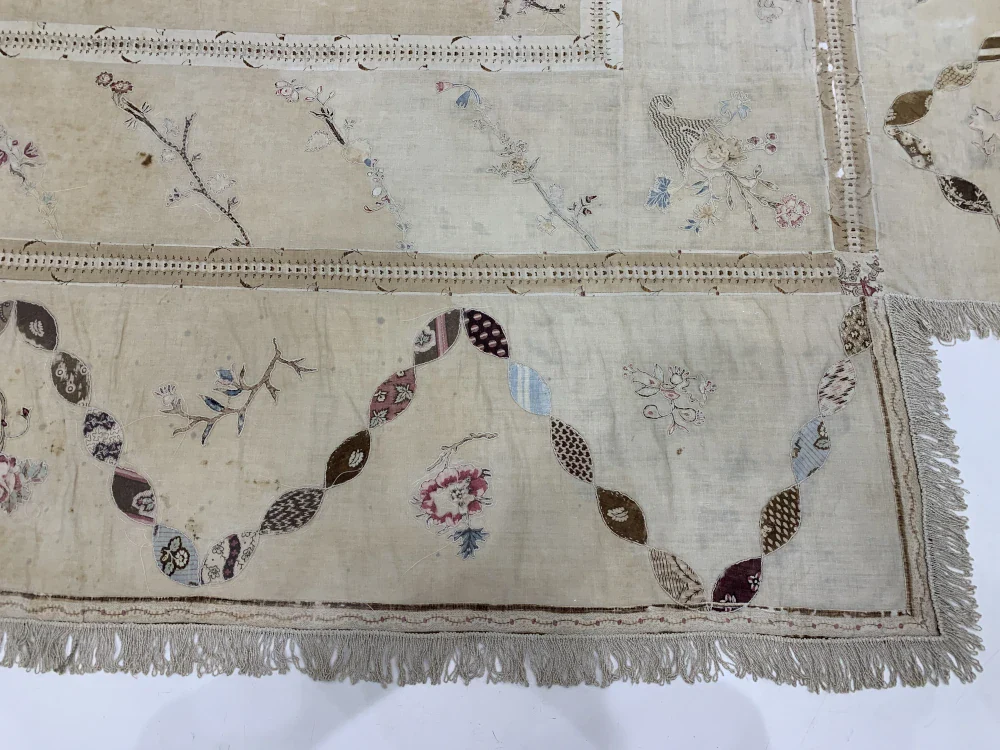
On Valentines Day in 2024, the counterpane was delicately washed using a dilute conservation-grade detergent and a stabilizing agent to prevent further dye loss. Afterwards and once the counterpane was dry we found that some of the strange discolouration remained and so a carefully controlled conservation bleaching treatment was devised. Working gradually over many days, the conservators subtly blended the discoloration into the surrounding fabric by lightning the hard oulines and gradually lightening the worst areas until the overall colour of the ground fabric was more even. The transformation was remarkable—the counterpane eventually emerging fresher, brighter, and far closer to its original elegance.
Reinforcement and Restoration
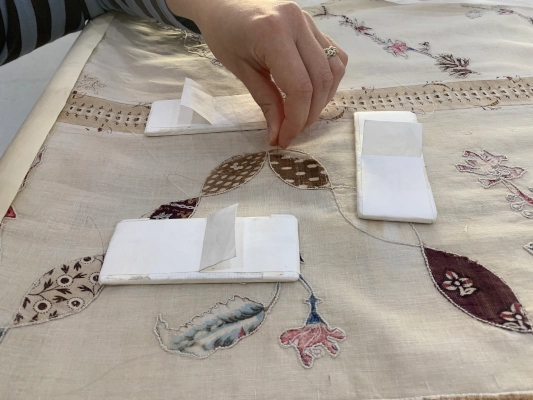
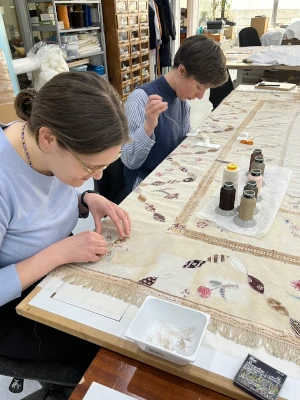
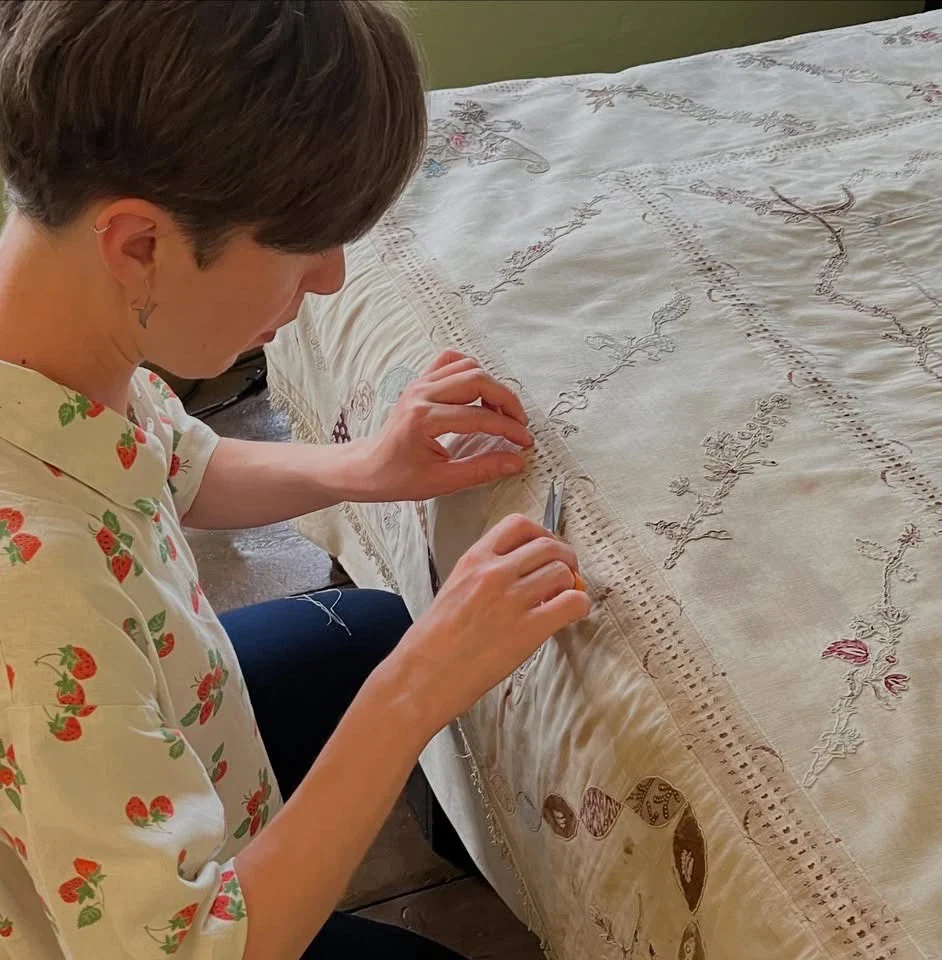
With cleaning complete, the focus shifted to structural repairs. A full support layer of a very lightweight cotton lining fabric was carefully stitched to the reverse of the counterpane, providing much-needed stability. The appliqué elements were reinforced with fine polyester thread and, where necessary, a protective layer of dyed conservation net. A missing section along one border was reconstructed using a subtly matched cotton patch, overlaid with net for additional security.


The final step was the reattachment of the counterpane’s distinctive knotted cord fringe, ensuring that its elegant drape would once again be visible when displayed.
Back on the Bed and Public Display
Though stabilized, the counterpane remains inherently fragile. To ensure its longevity, a custom-made supportive mount was created, shaped to fit the counterpane perfectly, allowing it to rest safely on the museum bed while minimizing strain on the fragile fabric.
Thanks to careful conservation this extraordinary textile – so deeply entwined with Cowper’s literary legacy – has been given a second life. Visitors to the Cowper & Newton Museum can once again admire the exquisite craftsmanship of Mrs King and reflect on the poetic words it inspired. None of this would have been possible without the generous support of the Association of Independent Museums and Pilgrims Trust, the Broderers Charity Trust, an anonymous donor, and the volunteers and trustees of the Cowper & Newton Museum. We are sincerely grateful to them all for enabling this conservation.
The counterpane was returned to public display at the Cowper & Newton Museum on Sunday, March 2, 2025. More details on how to visit are available on the Museum website.
Cowper’s Counterpane Story shared with kind permission of Cowper & Newton Museum
© Cowper & Newton Museum, 2025