
Art as a Love Letter – ‘All this for E.S.W from W.N’. by Molly Asbury
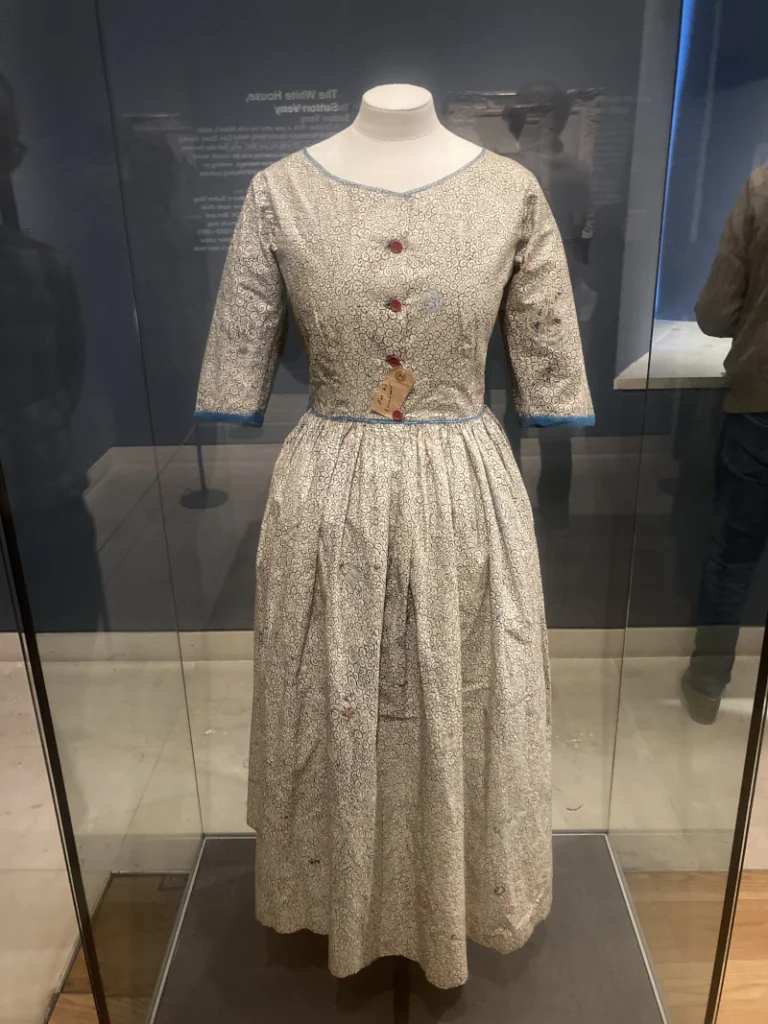
In Autumn 2025 a poignant piece of history arrived at the ZTC studio for conservation ahead of an upcoming exhibition at Pallant House Gallery. The dress, dating to c.1918, was painted by Sir William Nicholson, a much-admired figure of modern British art whose work spans printmaking, portraiture, landscapes and still life. This unique garment is adorned with intricate painted swirls and motifs, and is thought to possibly commemorate the end of the First World War and the celebration of Armistice Day. It was made for Edith Stuart-Wortley who later became Edith Nicholson following her marriage to William Nicholson in 1919.
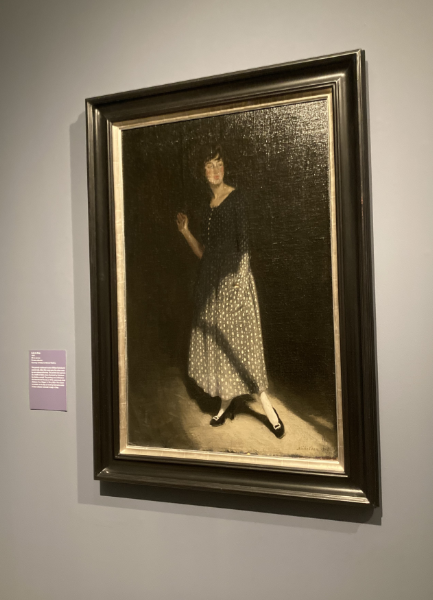
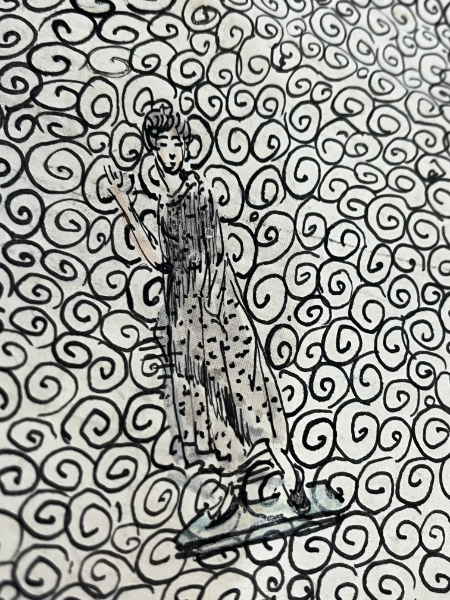
Edith Stuart-Wortley, known as Edie, and her husband, Jack Stuart-Wortley, had been family friends of the Nicholsons before the war, when Edith’s husband was reported missing and then confirmed dead whilst serving in France in 1918. Tragically, William Nicholson’s first wife, Mable Pryde Nicholson and one of their sons, Anthony Nicholson, also both died in 1918, Anthony whilst serving in the war. It is thought to be during this time of grief that Edith and William became close.1
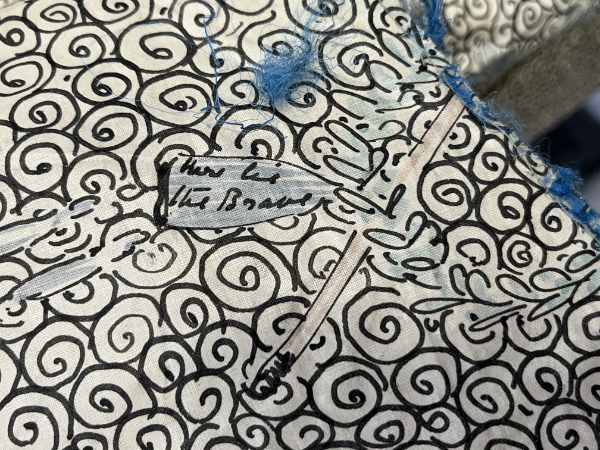
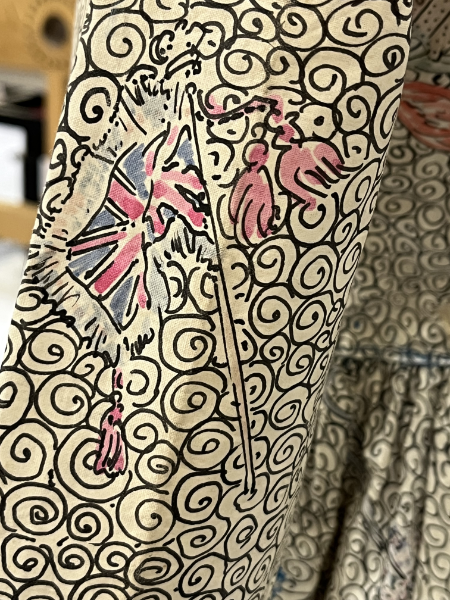
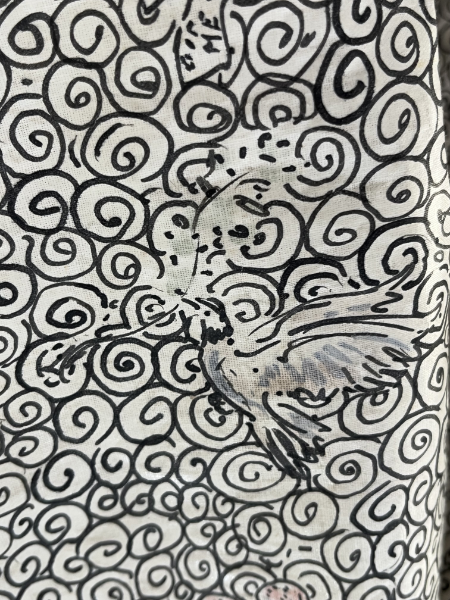
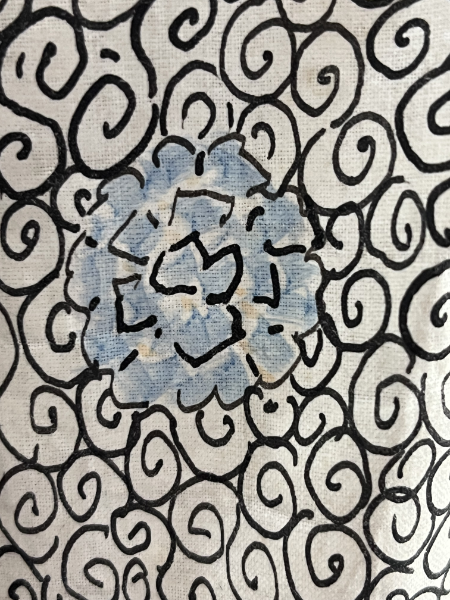
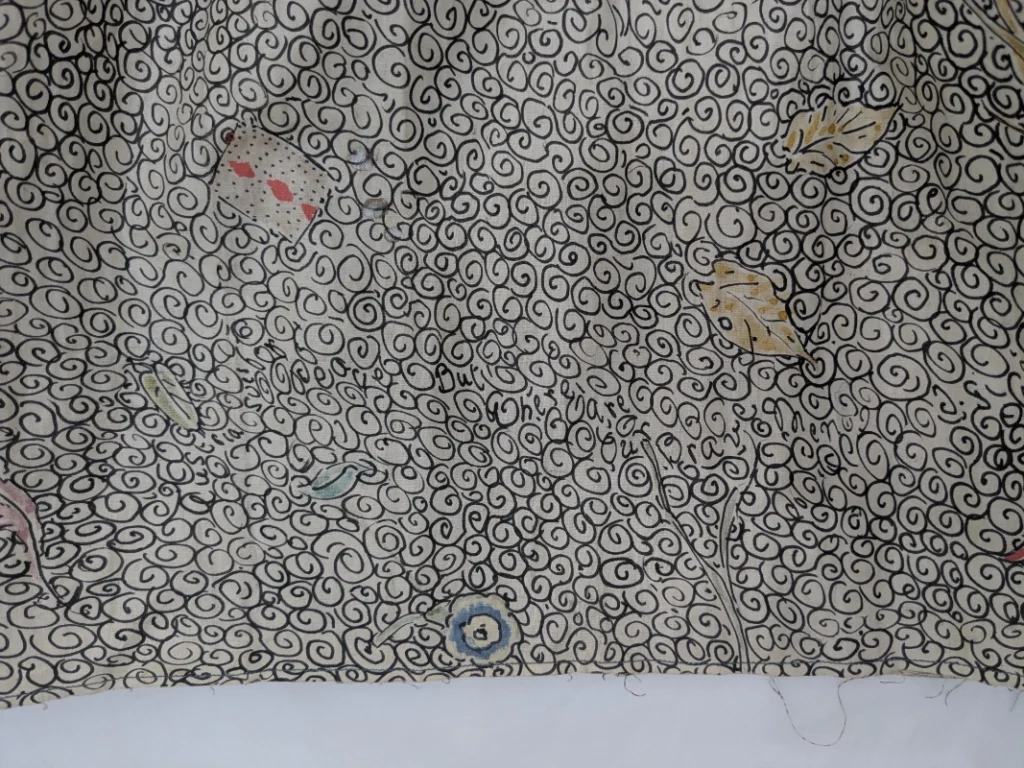
The dress has many references to the conflict throughout, such as depictions of white doves, flags, and memorials reading ‘Here lie the brave’. Understanding how profoundly the war affected both William Nicholson and Edith Stuart-Wortley’s lives makes its design all the more personal and moving.
Conservation Issues
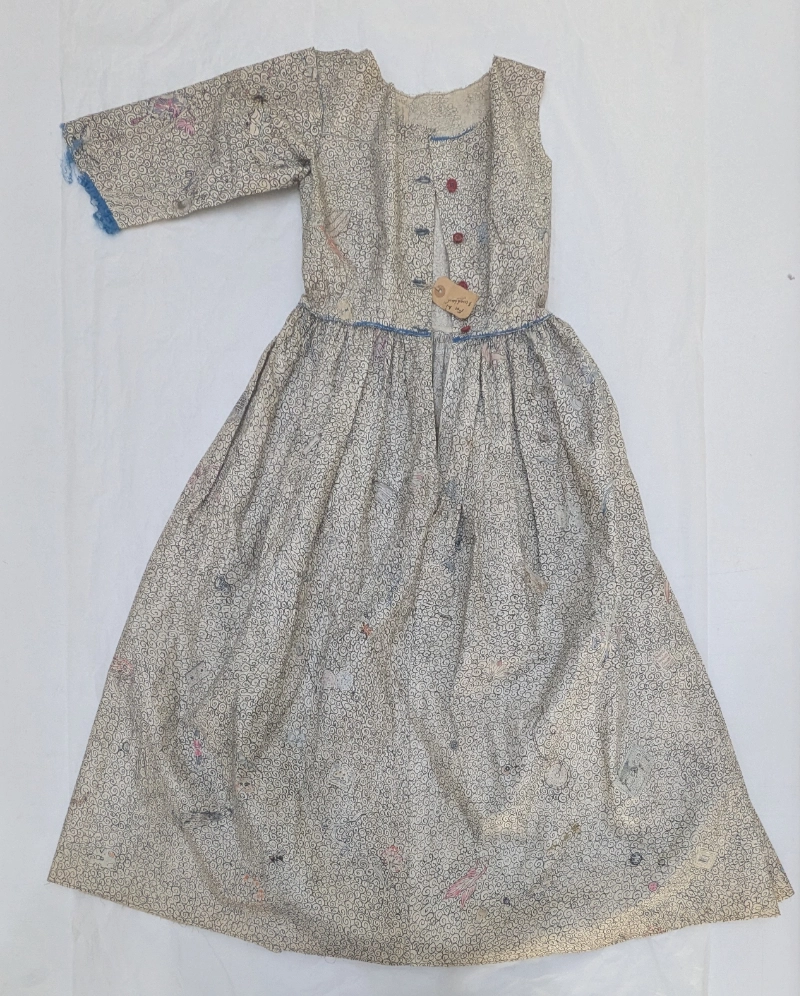
The dress is made from cotton that has been glazed to give a slightly shiny appearance and a crisp feel. Out of step with the fashions of the time, and in some ways feeling much more modern than its date with a high waist and slightly flared skirt, the dress appears to have been constructed quickly, with seams left unfinished, perhaps in anticipation of the celebrations that would be held for Armistice Day, or for stage or fancy dress.
The cotton itself was strong and in good condition, with minor soiling and creasing; however, the sleeves had been tacked onto the bodice to prevent them from becoming detached from the dress, and no original stitching remained. Additionally, the gathered bright blue silk trim that originally would have adorned the neckline, sleeves, and waistband was in very poor condition with much of it lost, and the remaining trim was vulnerable to further degradation.
The sleeves needed to be re-stitched to the dress to allow for display, and it was decided that some form of support was necessary to prevent the continued loss of silk trim. The dress also required the construction of a custom mount in order to give it the support and impact it deserves when on display at Pallant House Gallery.
Conservation Treatment
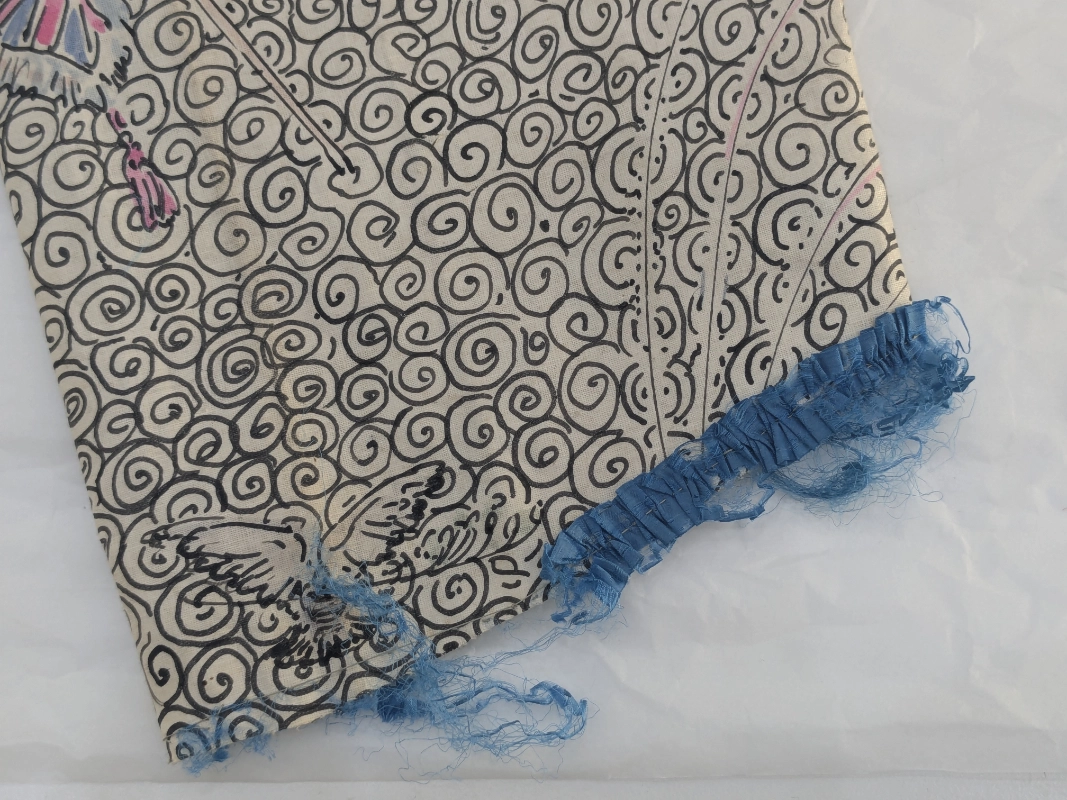
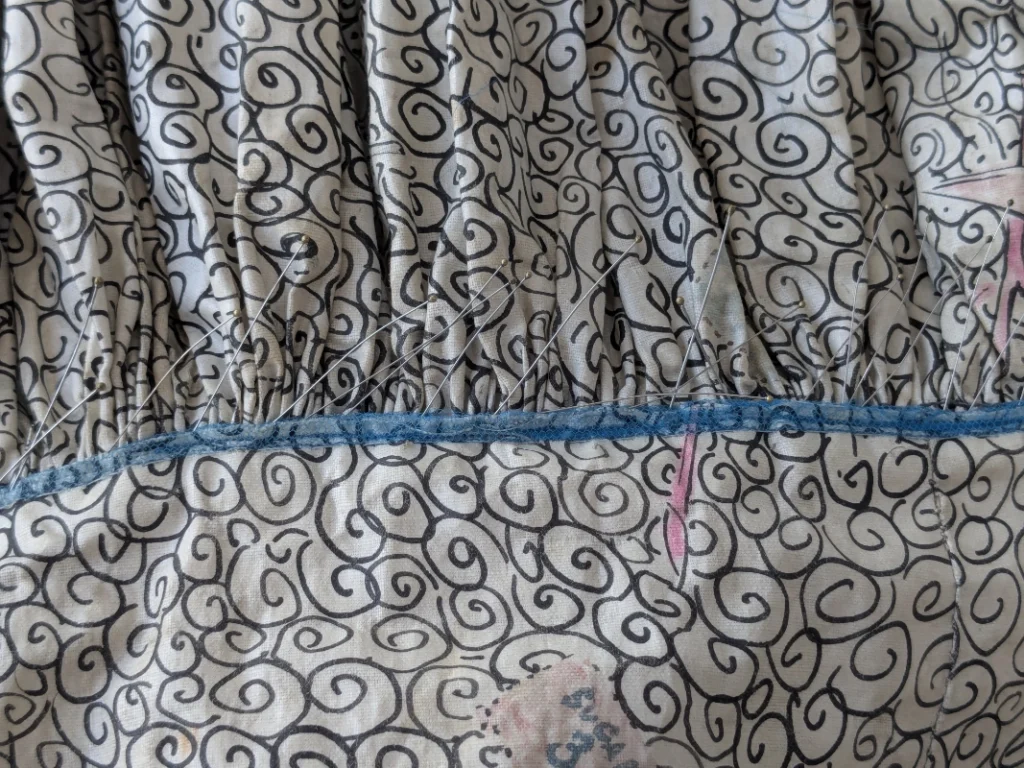
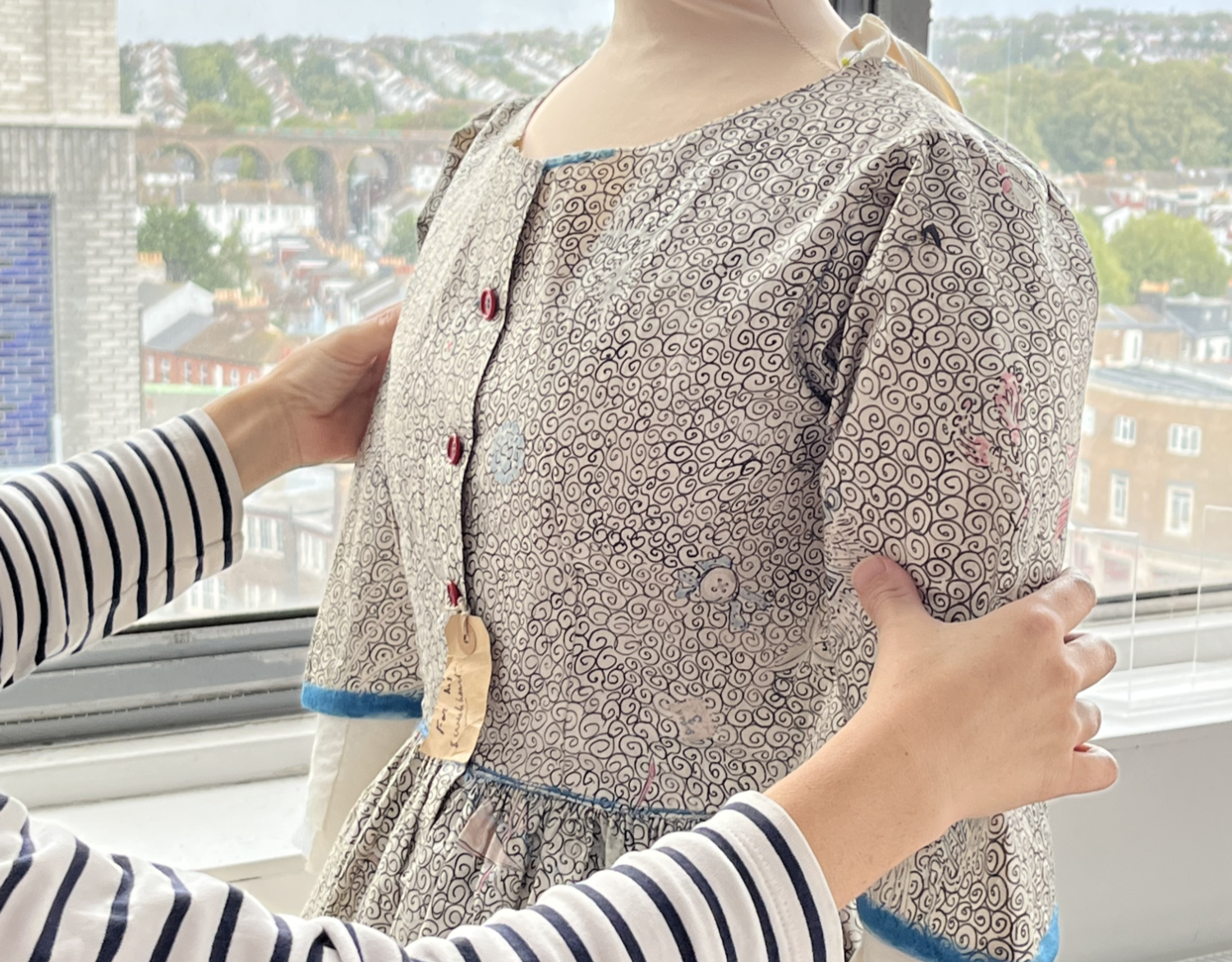
In order to preserve the silk trim, conservation nylon net was dyed to match the bright blue of the remaining silk. As conservators, we seldom have the opportunity to work with such vibrant colours, with most treatments typically requiring a variation of ‘conservation beige’, so it was a real treat to be able to dye net to match such vibrant hues.
When the required shade was obtained, it was time to support the fragile trim. In order to prevent further loss and breakage of the delicate silk, the dyed net was stitched to the dress over and around the remaining trim, encasing it and keeping it safe from further degradation that may result from handling. This method meant that no stitching or handling of the trim was required except to gently reposition any loose and straying fibres, with all stitching through the much stronger cotton instead.
Evidence of the trim was found on the neckline, sleeves, and waistband, and it was decided that the net would be used to both cover the remaining silk and in-fill areas where it had been completely lost. When choosing to infill an area, conservation ethics generally dictate that the aim of conservation is not to return an item to its original state or a perceived ideal state, but to preserve it as it is now. However, in the case of this dress, it was felt that the loss of trim was visually distracting and that additionally the importance of an artist or maker’s intent deserves consideration, particularly when conserving items as personal as unique as this. It was therefore deemed appropriate to use conservation materials to hint at the missing trim in areas where it no longer remained.
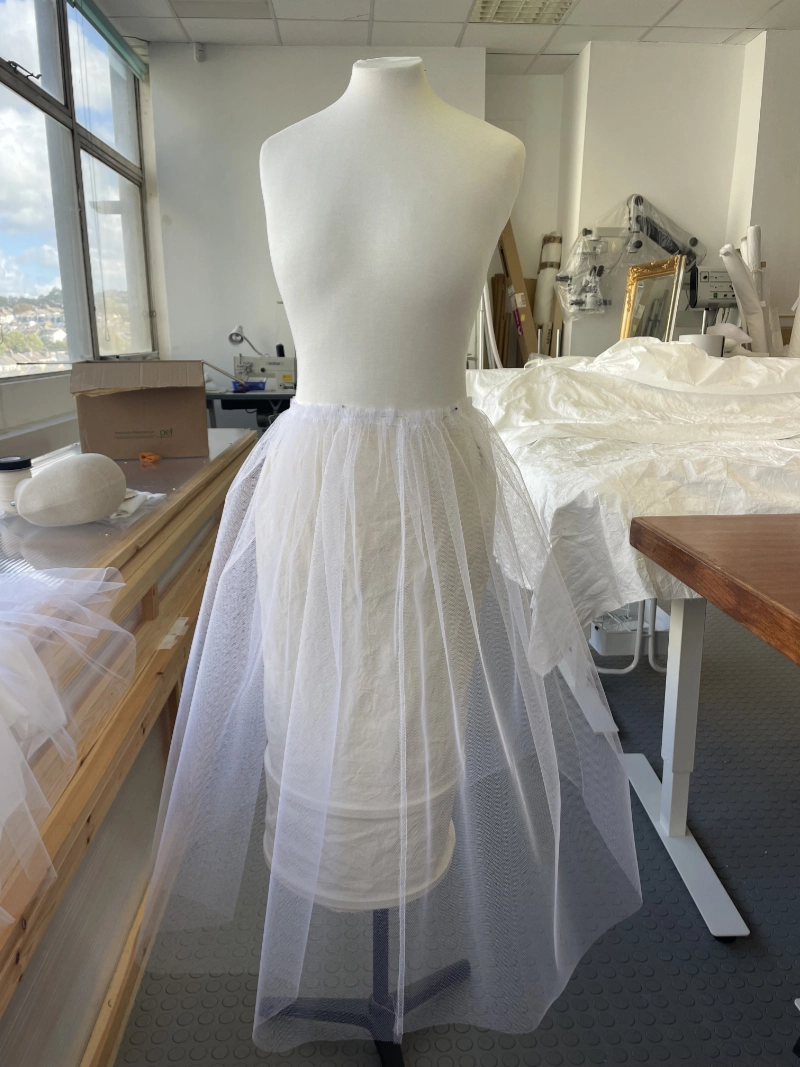
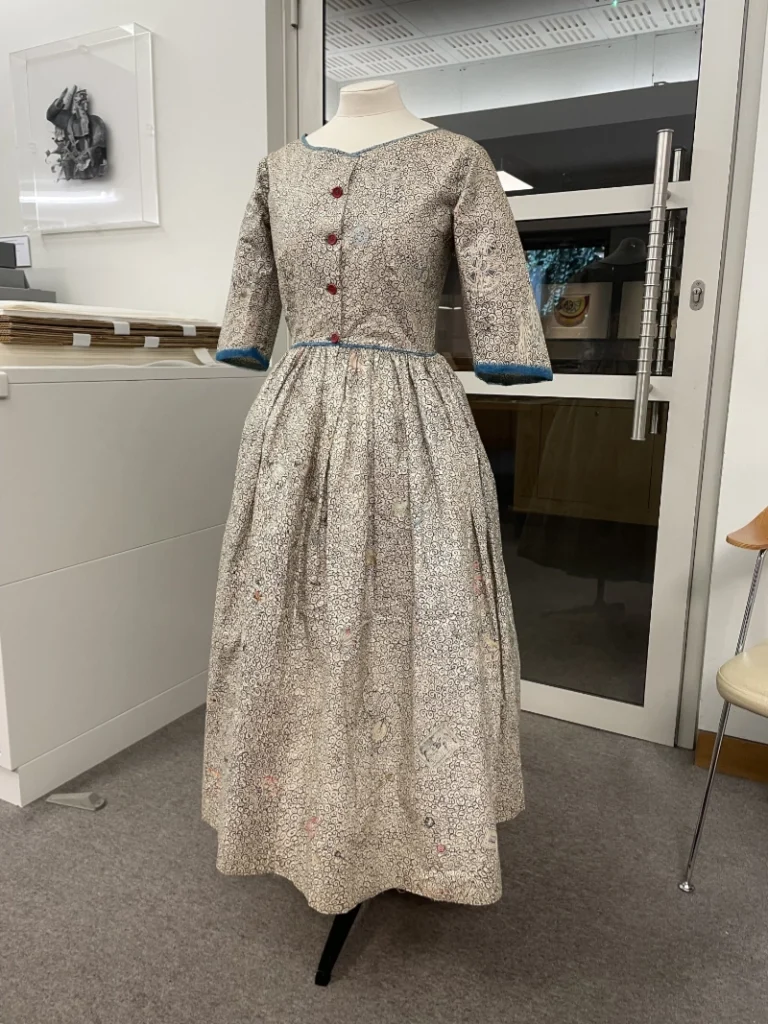
Following the support of the trim, the detached sleeves were stitched back into place on the bodice, before a custom mount was then created. The mount worked to support the dress, minimising the risk of physical stress during its time on display, whilst also conveying its intended fit and aesthetic qualities.
Discoveries along the way
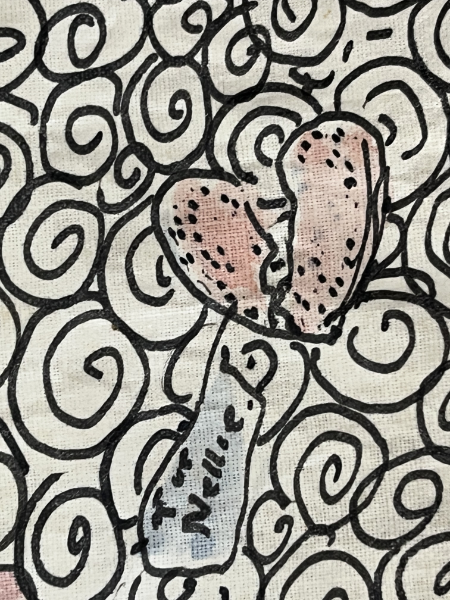
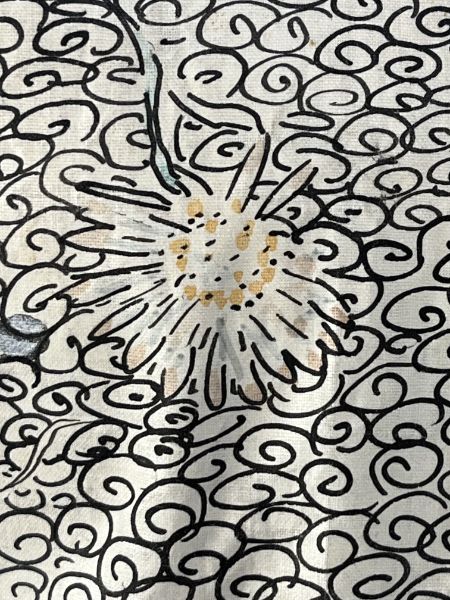
Having had the opportunity to spend a number of hours working on the dress, more and more of its details were revealed as time went on. At first glance, the design appears to be of artistic swirls with larger motifs interspersed throughout, but on closer examination, there are many hidden messages to be found within the black and white background.
Some of the messages are cryptic or indecipherable, but others are personal and poignant. Particularly touching elements include the personal message ‘All this for E.S.W from W.N’, and the tragic ‘Peace But Where Are Our Brave Men’. Though we may not ever know the exact circumstances of the dress’ creation or intended context, it is clearly a heartfelt and extremely meaningful item that adds another dimension to Nicholson’s work on display at Pallant House Gallery.
William Nicholson’s dress is on display at Pallant House Gallery in Chichester from 22 November 2025 – 10 May 2026, as part of the first major exhibition of the artist’s work in over 20 years. For more information and to book tickets visit Pallant House Gallery website.