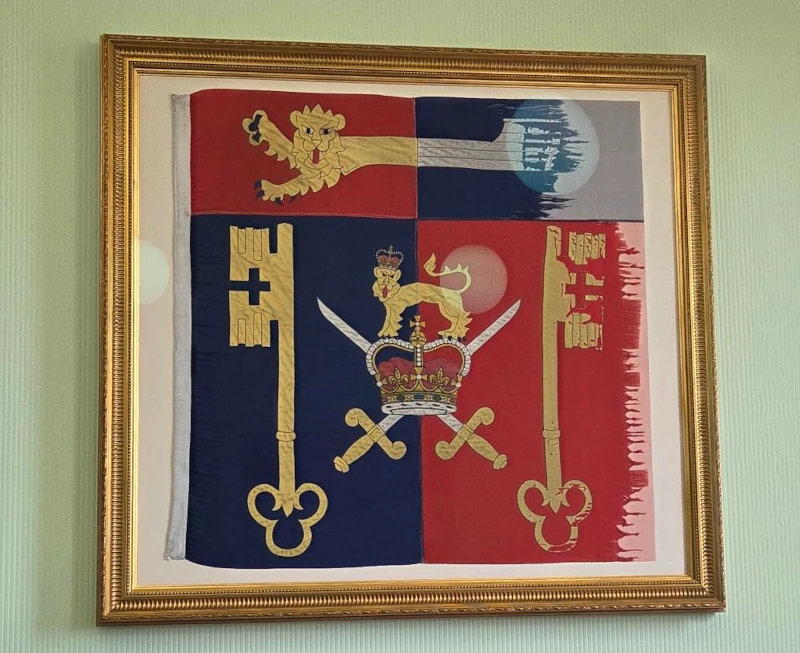

In early 2025, a remarkable twentieth-century military standard arrived at our Brighton studio under urgent circumstances. The standard had hung for many years in the barracks office of the Commandant of the Royal School of Military Engineering, serving as both a ceremonial object and a visible connection to the long military history of Dover Castle.
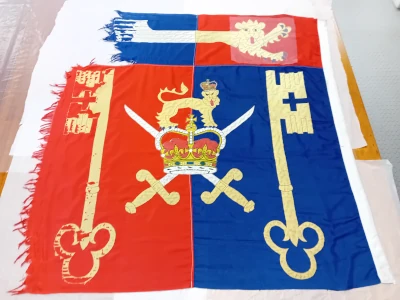
However, following a leak within the building, water had entered the frame from the rear, saturating both the mount and the textile. By the time the standard reached us, almost half of the flag was still damp and active mould colonies had established themselves across both the surface and the concealed areas between the textile and its support.
What initially appeared to be a straightforward framed object quickly revealed itself to be a more technically demanding textile conservation project.
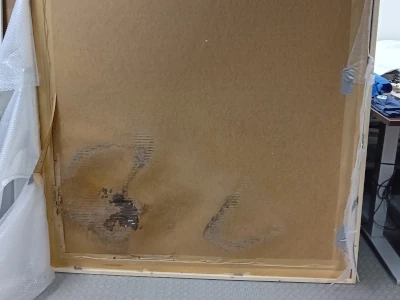
First Impressions
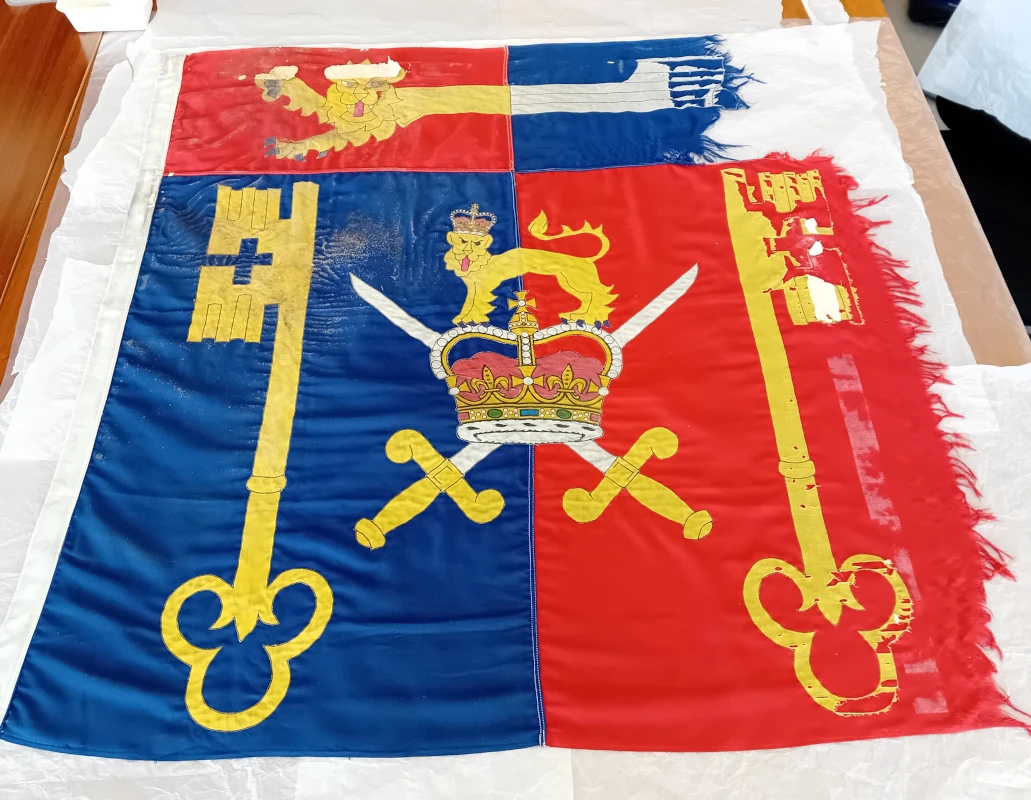
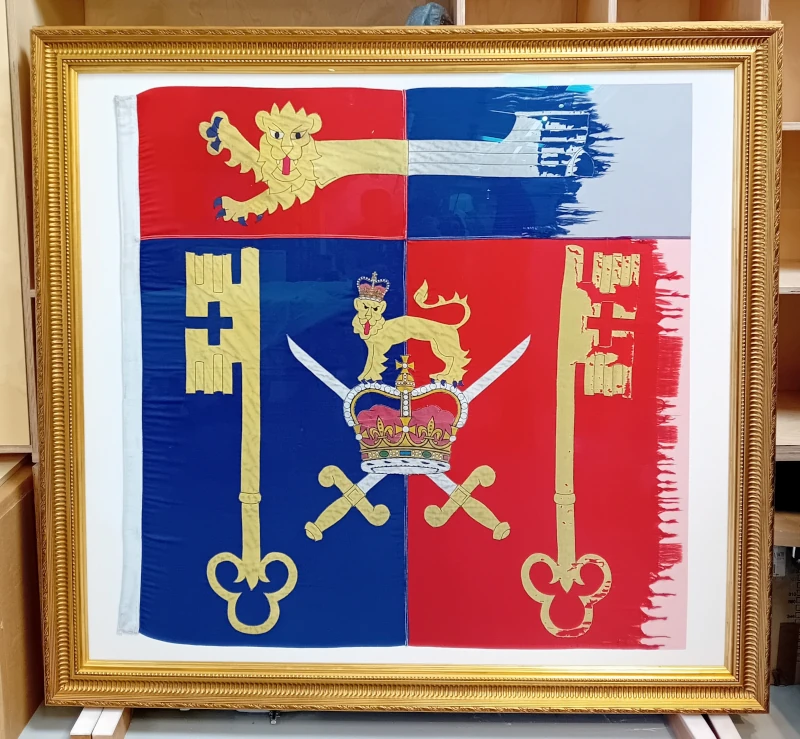
The standard, measuring approximately 127 x 126.5 cm, was constructed from machine-seamed synthetic red and blue fabrics, with cotton appliqué motifs stitched to both sides. These motifs included heraldic lions, crowns, and decorative insignia, each contributing to the object’s ceremonial significance.
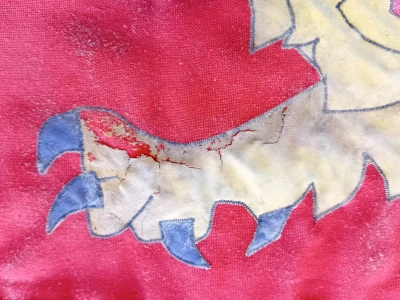
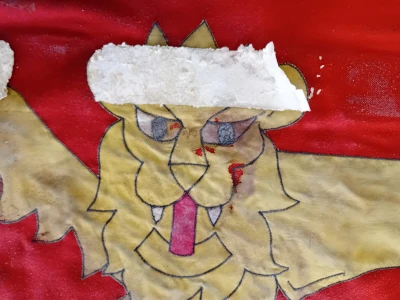
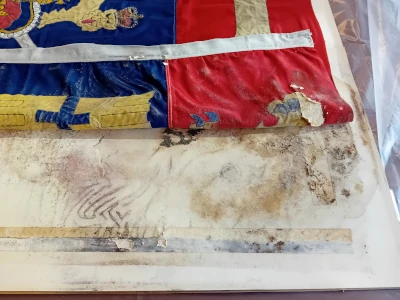
Unfortunately, the previous mounting method had left the standard particularly vulnerable. It had been attached directly to a composite cardboard support using double-sided adhesive tape, with additional staples inserted along the edges to hold the textile in place. Over time, these materials had already begun to deteriorate. Once exposed to moisture, the adhesives softened, the support boards swelled, and the environment became ideal for mould growth.
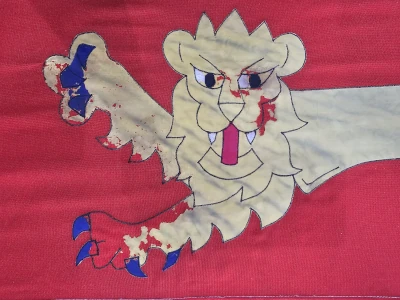
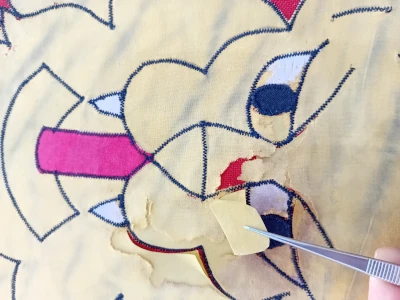
Examination under magnification identified at least four visually distinct mould colonies, ranging from white filamentous growth to black, brown, and red spores. Some of the cotton appliqués, particularly within the lion motifs, had become brittle, fragmented, and in places entirely consumed by fungal activity. The object was not simply dirty or stained. It was biologically active, structurally compromised, and at immediate risk of further loss.
The first stage of treatment involved safely removing the standard from its damaged support. This required careful extraction of staples, mechanical separation from adhesive residues, and extensive documentation of all condition issues before intervention.
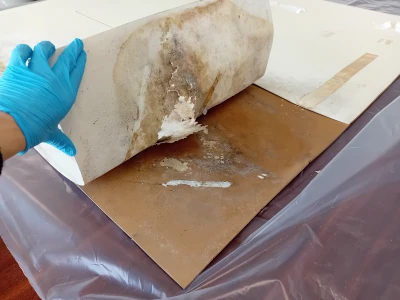
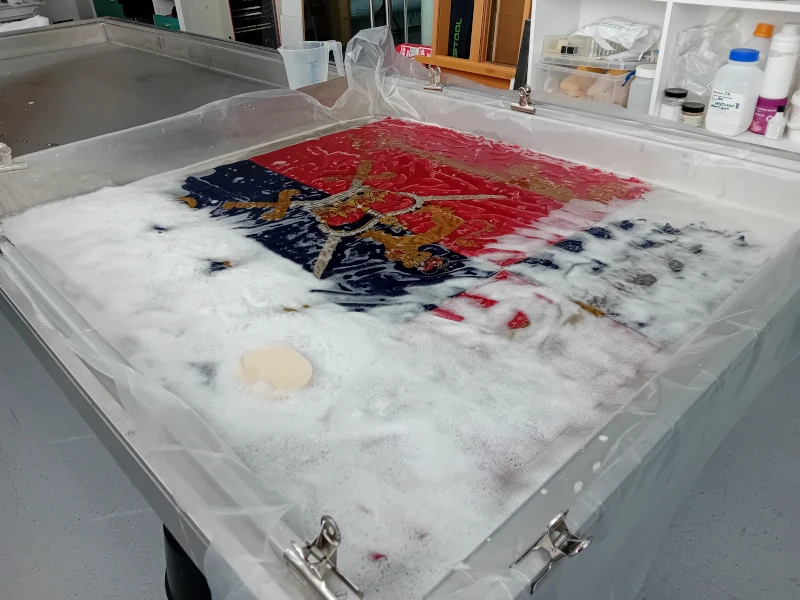
Once dry, the textile underwent controlled surface cleaning using low-suction conservation vacuuming to reduce loose mould spores and surface contamination. As mould can remain viable even after drying, the next phase involved solvent treatment to denature the fungal growth. The standard was immersed in a carefully controlled industrial denatured alcohol bath, allowing the solvent to penetrate both the ground fabric and the affected appliqué areas.
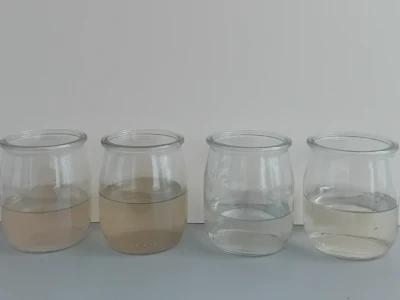
Following this, the object was wet-cleaned using conservation-grade detergents and filtered water. Every stage was monitored closely for dye stability, fibre response, and any movement of weakened fragments.
As the rinsing progressed, the visual transformation became increasingly apparent. Water staining began to lift, grey tide lines softened, and much of the mould discolouration reduced significantly. More importantly, the textile regained flexibility and could once again be safely aligned.
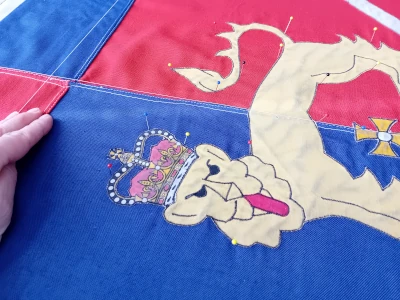
Repairing fragile losses
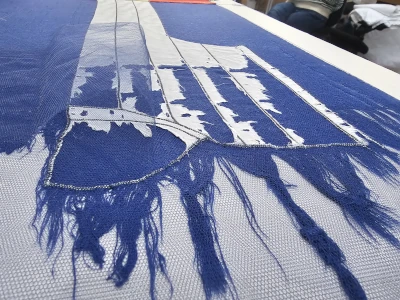
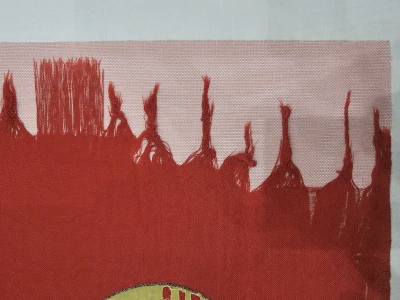
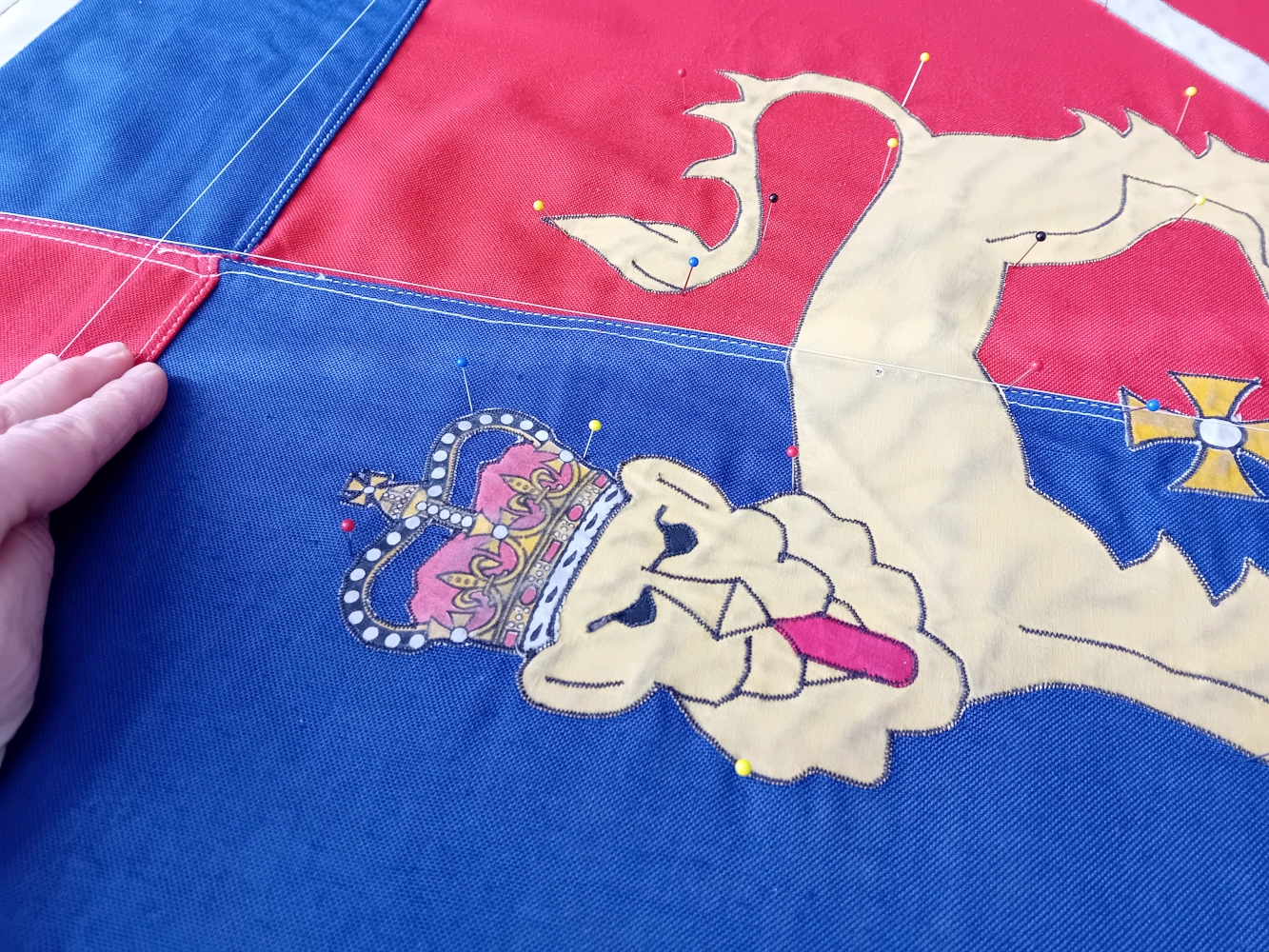
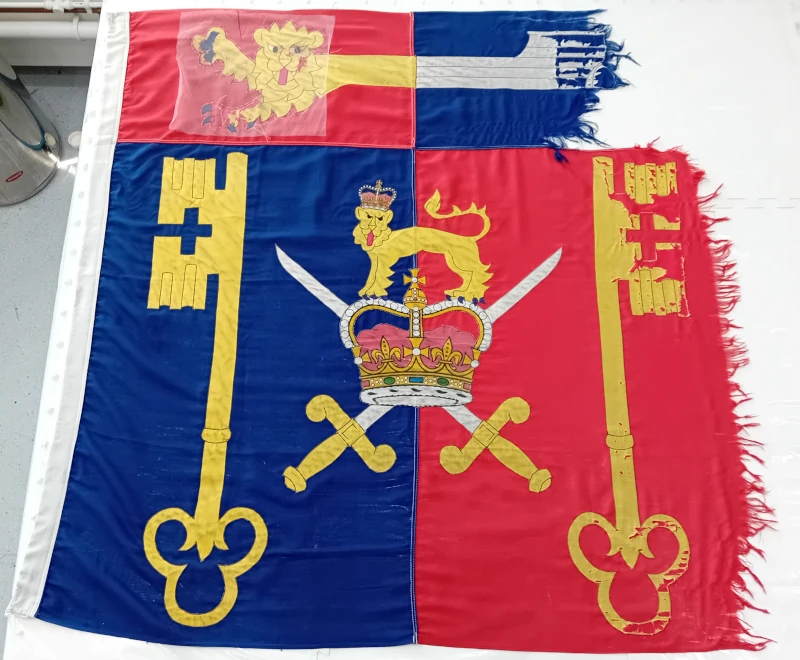
Once stabilised, attention turned to its structural vulnerabilities. The fly edge had suffered significant fraying from previous wear and environmental exposure. Detached threads had become tangled and uneven, creating both visual disruption and ongoing risk of loss. To secure these areas, custom-dyed nylon support net was prepared in matching tones of red and blue, then hand stitched into position to support the weakened edge while preserving the object’s original character.
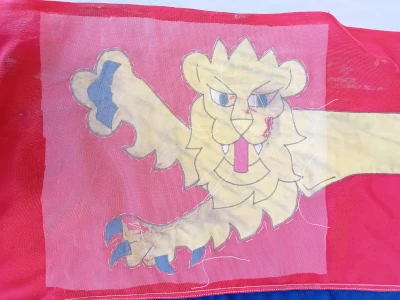
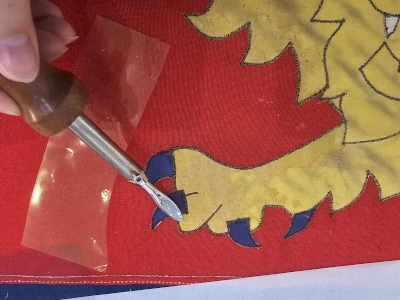
The most complex repairs centred on the lion appliqués, where mould had caused severe fibre degradation. Areas of loss within the face and limbs required highly sympathetic infills using Japanese tissue and toned support fabrics. These were inserted with minimal intervention, allowing the imagery to read clearly without obscuring the evidence of age and use. As with all conservation work, the aim was not restoration to “newness,” but stabilisation, legibility, and long-term preservation.
A new support for the future
Once treatment was complete, the standard was mounted onto a bespoke lightweight conservation board constructed from inert aluminium composite material with an internal timber support.
The board was padded and covered in museum-quality display fabric before the standard was aligned and stitched into place by hand. Seams, edges, and vulnerable appliqués were all individually secured using colour-matched conservation threads.
Finally, the object was reframed behind museum-grade acrylic glazing within an ornate gold frame chosen to sympathetically fit with the other artworks in the office. The UV protection and anti-reflective properties of the acrylic will provide both environmental protection and optimal display.
More than a flag
Military textiles often carry layers of meaning beyond their material construction. They represent service, ceremony, identity, and continuity. This standard, once at risk of permanent loss, can now continue its role as part of the living heritage of Dover Castle. Projects such as this remind us that conservation is not only about preserving fibres and stitches it is about safeguarding the stories that objects carry. Sometimes, objects and their stories survive only because someone noticed a leak in time and acted quickly to save them.